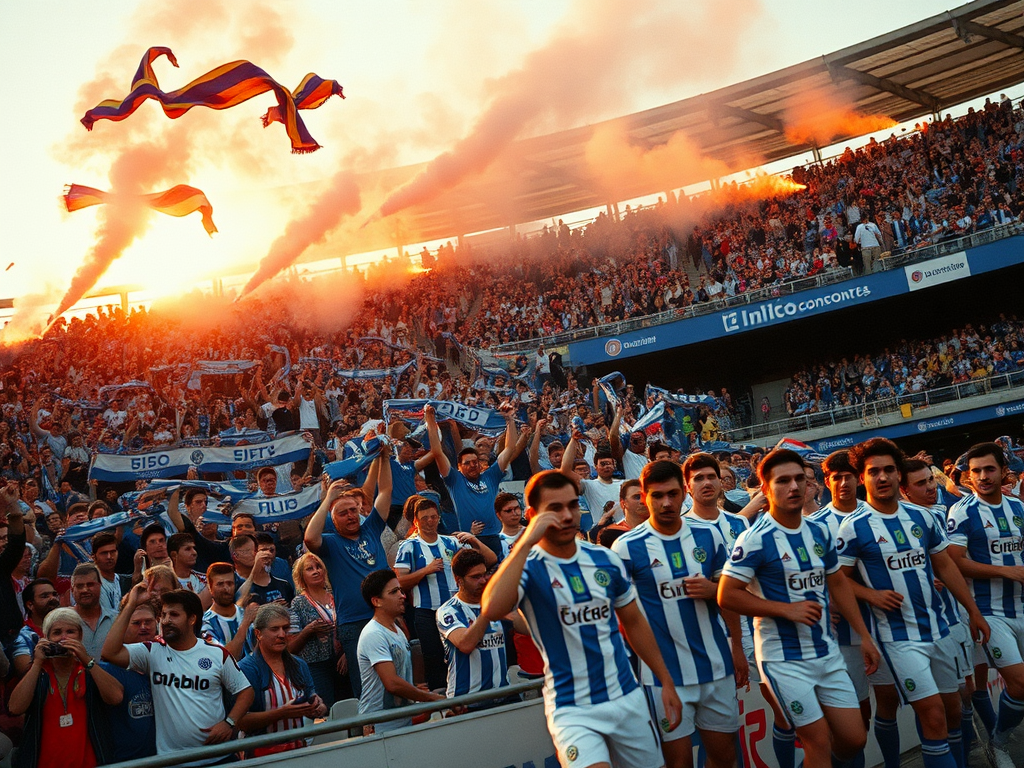
 Club Deportivo Leganés
As C.D. Leganés continues their campaign in La Liga, fans have witnessed a mixture of exhilarating attacking play and frustrating defensive lapses. While the Pepineros have shown the ability to dominate possession and create chances, their recent form has revealed vulnerabilities that need addressing if they aspire to climb higher in the league standings. A thorough tactical analysis reveals some key areas where adjustments could yield better results.
Current Tactical Setup
Under the guidance of their coaching staff, Leganés has predominantly utilized a 4-2-3-1 formation. This setup allows for a solid defensive base with two holding midfielders, while also providing the flexibility to transition into a more aggressive attacking unit. However, recent matches have exposed a few weaknesses in this approach, particularly in terms of defensive organization and the effectiveness of the front three.
Defensive Structure
One of the primary issues that has surfaced is the susceptibility to counter-attacks. The double pivot in midfield, while offering a shield to the backline, has occasionally been caught too high up the pitch, leaving the center-backs exposed. To remedy this, it might be beneficial for the team to adopt a more conservative approach, particularly against teams known for their counter-attacking prowess. Dropping one of the attacking midfielders to create a 4-3-3 setup could enhance defensive stability while still allowing for attacking options on the wings.
Midfield Dynamics
In the current configuration, the midfield duo has struggled with maintaining possession under pressure. Increasing the mobility of the midfielders could help in retaining the ball and dictating the tempo of the game. Implementing a rotation system where one of the holding midfielders occasionally steps into a more advanced role could create confusion for opposing defenses and open up spaces for attacking players. This would also assist in creating overloads in central areas, allowing the team to exploit weaknesses in the opposition's formation.
Attacking Adjustments
Offensively, while the individual talents of players like Rubén Pardo and Aitor Ruibal have shone through, the overall attacking cohesion has been lacking. A key suggestion here would be to encourage more fluidity among the front four. Allowing the wingers to interchange positions with the central striker can create unpredictability, making it harder for defenders to mark their assignments. Additionally, utilizing the full-backs more actively in the attacking phase could stretch the opposition and provide more crossing opportunities for the forwards.
Set-Piece Strategy
Lastly, Leganés should refine their approach to set-pieces. Currently, their delivery has often lacked precision, and they have missed opportunities to capitalize on their height advantage. Working on set-piece routines in training could turn these situations into valuable goal-scoring chances. Employing varied delivery techniques and ensuring that key aerial threats are well-positioned can improve their effectiveness during corners and free-kicks.
Conclusion
In summary, C.D. Leganés possesses the talent and potential to be a formidable force in La Liga, but tactical adjustments are essential for optimizing their performance. By addressing defensive vulnerabilities, enhancing midfield mobility, fostering attacking fluidity, and refining set-piece strategies, Los Pepineros can transform their recent form into consistent success. As the season progresses, fans will be eager to see how these tactical tweaks are implemented on the pitch.